
【Wdoodoo Weekly Cotton Report】High base spread and low warehouse receipts support rebound, but weak demand limits Zhengzhou cotton space
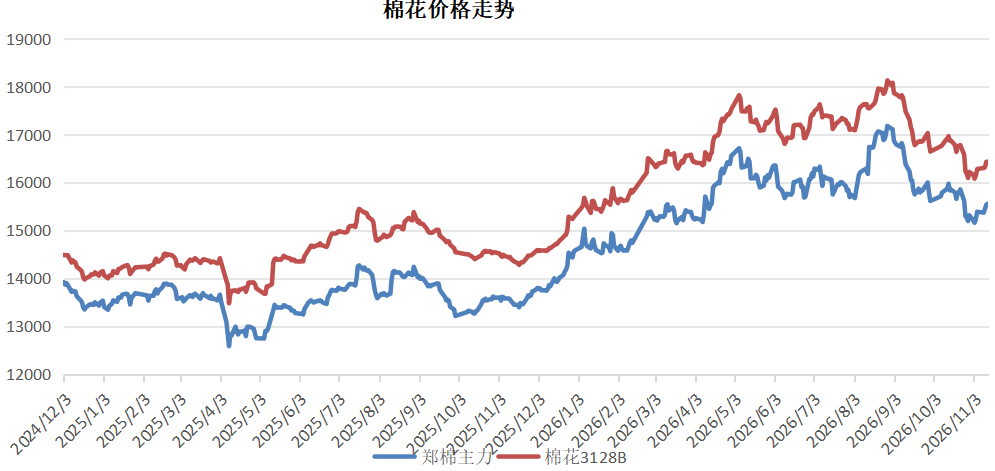
Last week, Zhengzhou cotton prices fluctuated and rebounded. The主力01 contract closed at 15,555 yuan/ton, up 170 yuan/ton from the previous session. The national cotton 3128B closed at 16,435 yuan/ton, rising 150 yuan/ton. With macroeconomic disturbances weakening, market trends reverted to fundamental industrial dynamics. Low inventory positions and high basis supported cotton prices' oversold rebound. However, as new cotton from the Northern Hemisphere flooded the market and downstream demand continued to weaken, short-term cotton prices are expected to trend within a range.
-
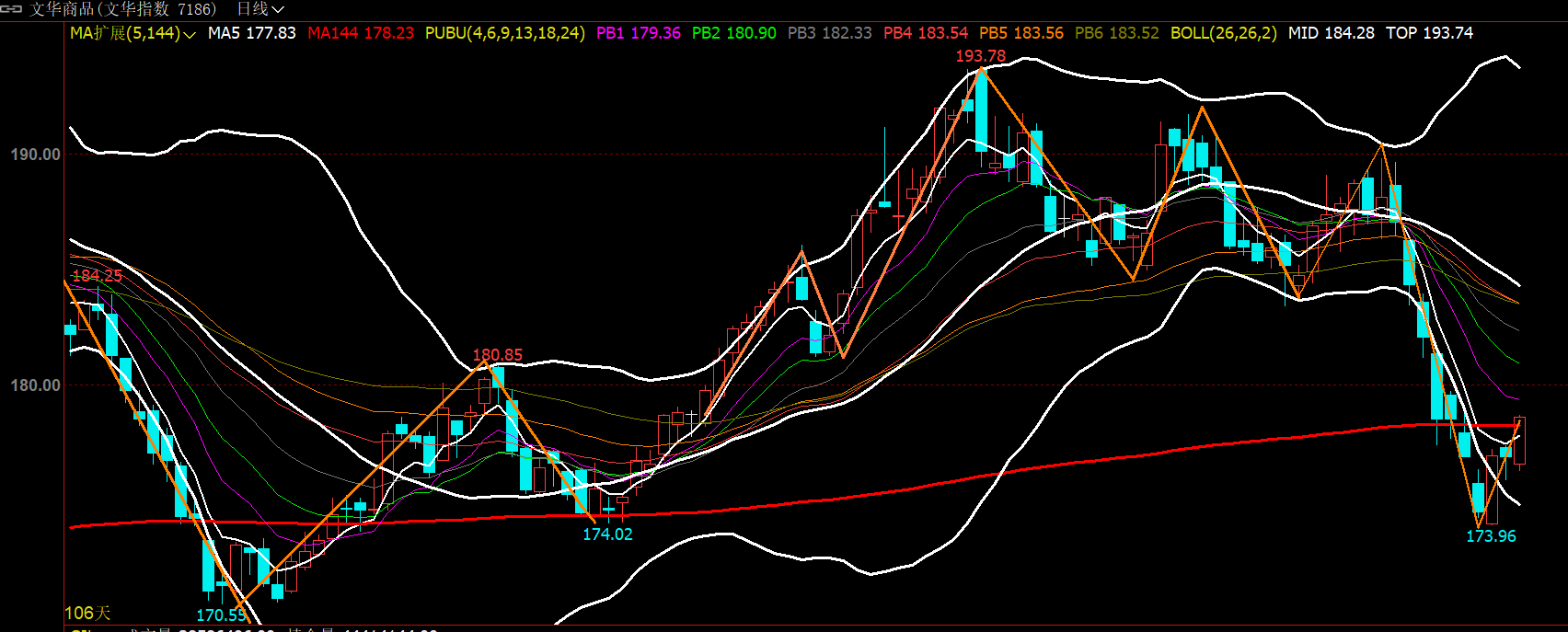
At the macro level, external financial disturbances have eased. The APEC meeting this week and the trilateral talks among China, the U.S., and Russia have helped mitigate international conflicts. The situation in the Middle East has cooled somewhat, with the International Energy Agency's November report forecasting accelerated Gulf oil exports, leading to a quarterly crude oil supply surplus of 1.7 million barrels per day. However, expectations for a December rate hike remain strong, and the robust rebound in the dollar index has suppressed commodity performance.
Supply is ample but supported in the short term.
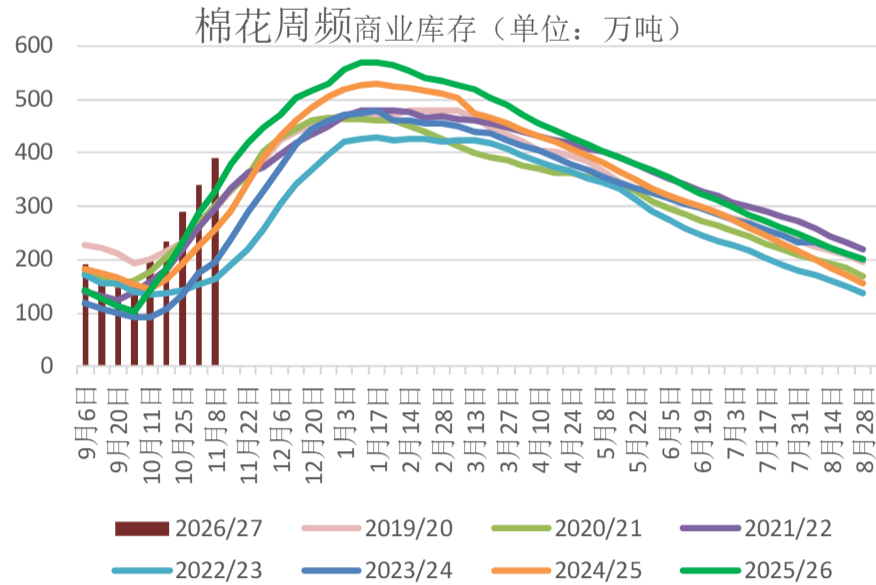
The peak of new cotton arrivals has arrived, with supply delivery significantly faster than in previous years. As of November 12, the national cumulative public inspection of new cotton reached 3.16 million tons, up 440,000 tons year-on-year. Cotton harvesting in Xinjiang has largely concluded, about 10 days earlier than in the previous two years. National commercial cotton inventory rose to 3.7276 million tons, a 27% increase year-on-year. The U.S. cotton harvest rate also reached 71%, with the concentrated arrival of both Chinese and American cotton continuing to constrain the upward momentum of cotton prices.
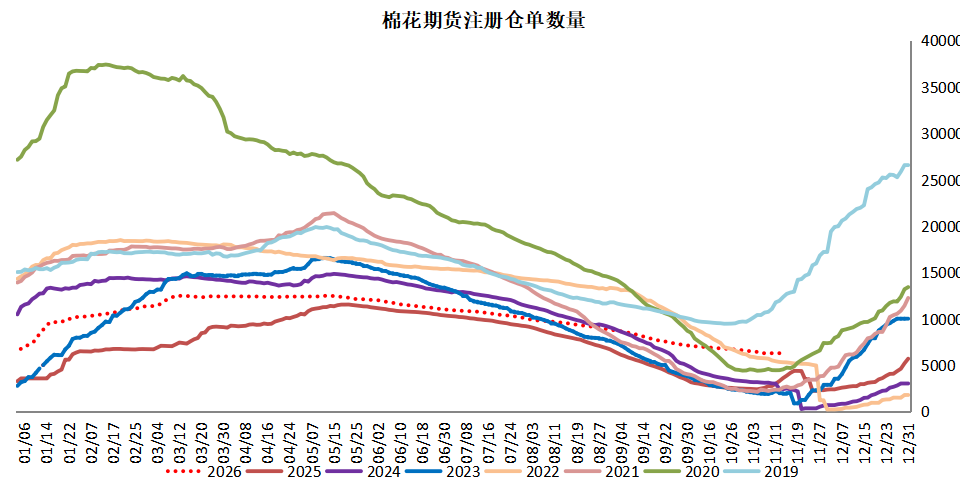
The acquisition cost of the cotton mill is inverted, the sales willingness is weak, and the high-quality cotton base is stable. The cotton sales rate is only 7.7%, far lower than the same period in previous years. Only 32 new cotton warehouse receipts were registered between 26-27, a sharp decline compared to the same period last year. In the case of high base difference and low warehouse receipts, hedging stocks cannot enter smoothly, which is also the core driving force behind the recent rebound of Zhengzhou cotton.
The USDA11 monthly report is neutral to bullish, with slightly lower production in India and the United States compared to the previous month, while raising production in China and Australia. The global production forecast has been lowered by 103000 tons month on month and 991000 tons year-on-year. The global ending inventory forecast has been lowered by 25000 tons month on month, a decrease of 1.105 million tons year-on-year. The inventory consumption ratio decreased by 5.15 percentage points year-on-year to 57.49%.
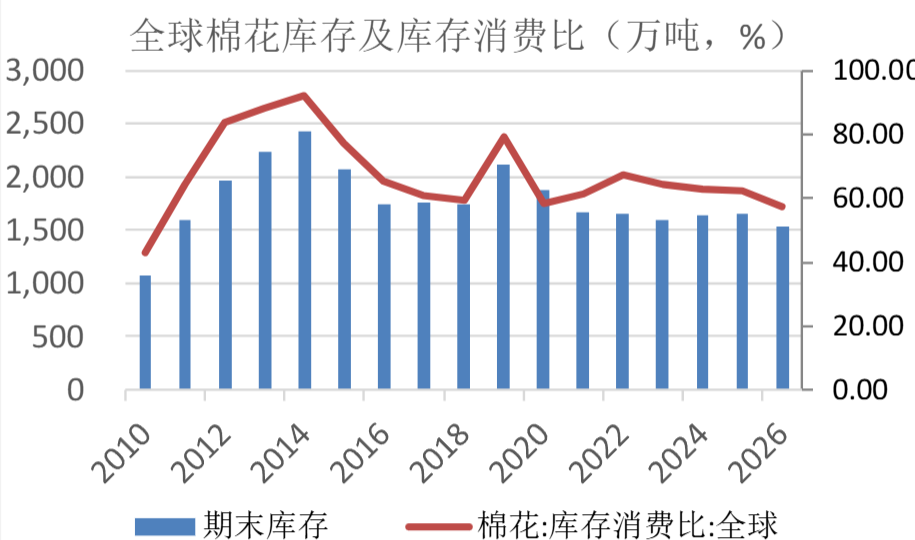
3. Downstream negative feedback continues to deepen.
The cotton spinning PMI in October was only 37.99, continuing to decline month on month. The yarn production rate continues to decline, and the losses of mainland yarn factories are expanding, leading to an increase in production restrictions and shutdowns. Cotton yarn and greige fabric inventory continue to accumulate, and textile enterprises mainly rely on short orders and on-demand procurement, with insufficient willingness to actively replenish inventory. Cotton trading is flat, mainly due to a lock up basis difference. Cotton yarn prices have rebounded slightly, but have not yet been converted into actual orders. It is difficult for downstream buyers to form sustained buying support before cotton yarn continues to go out of stock.
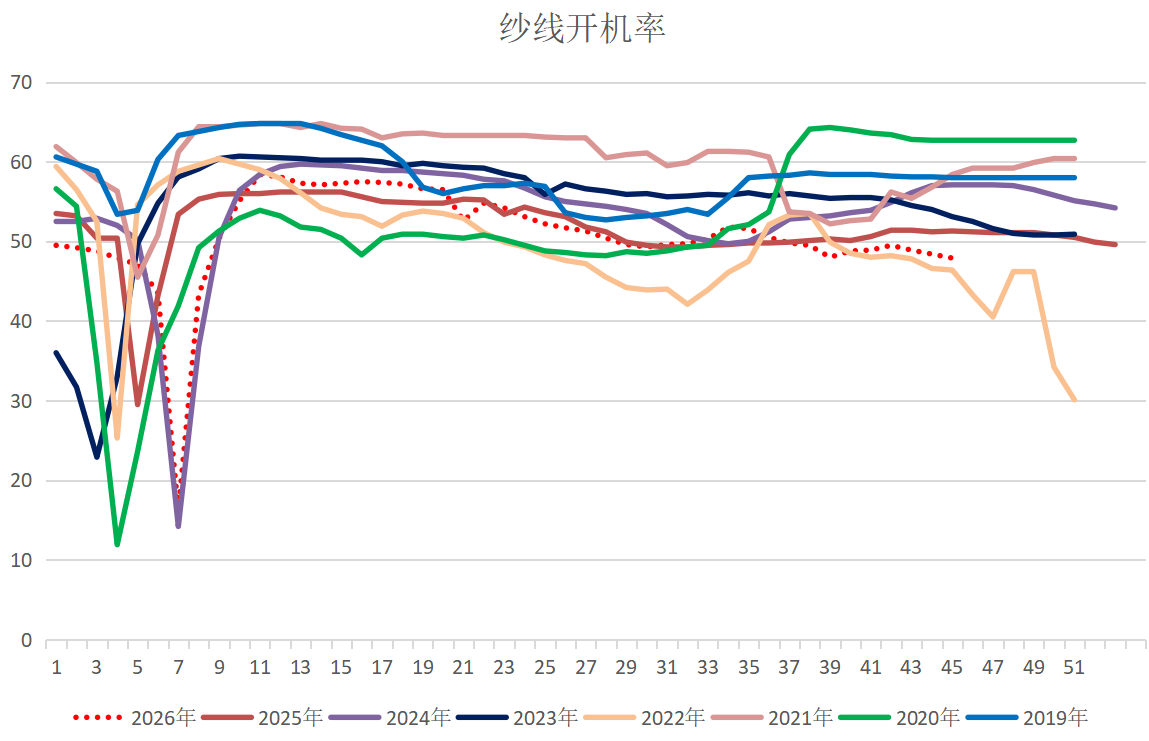
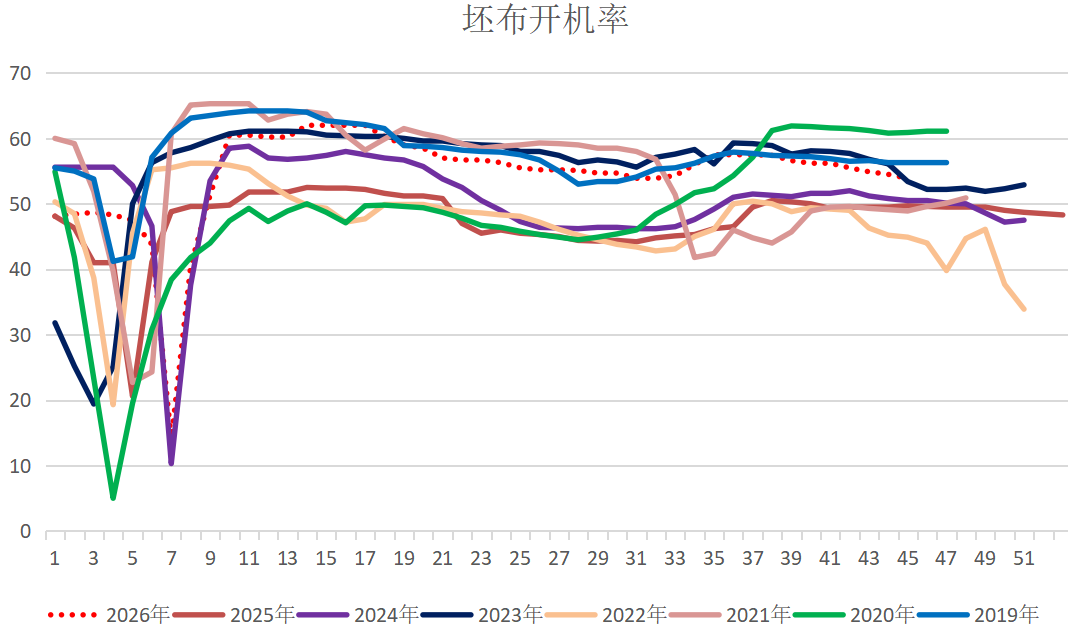
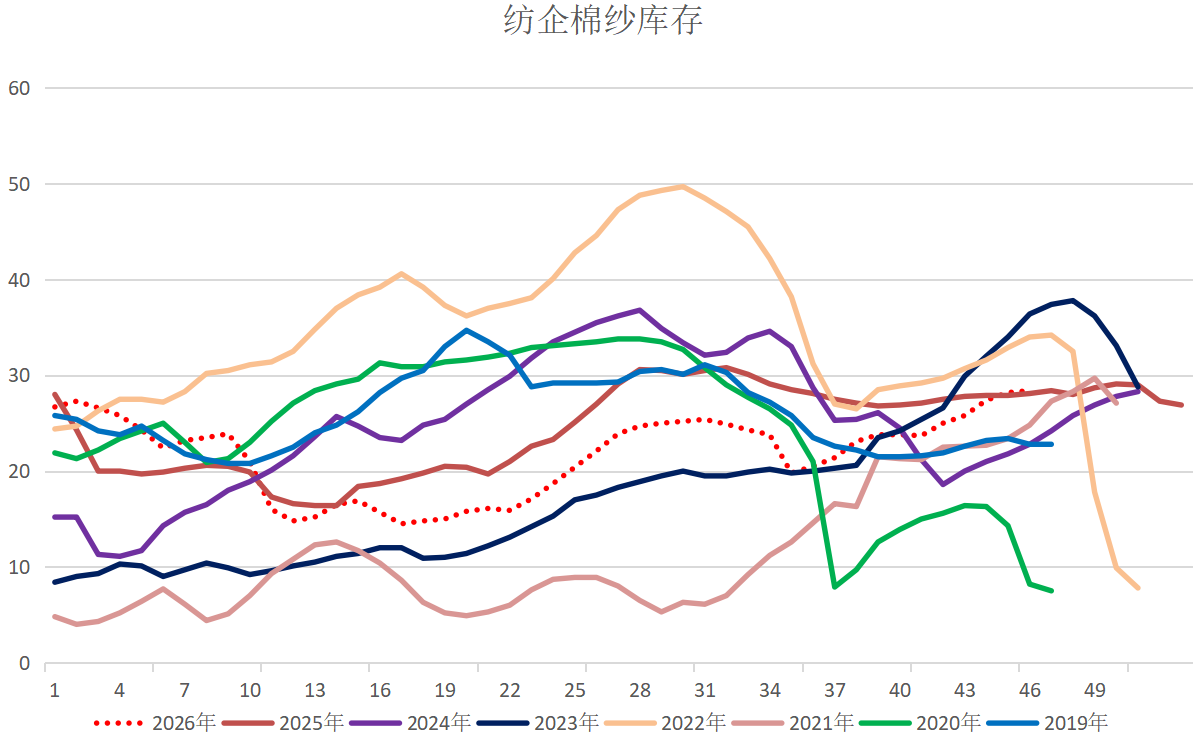
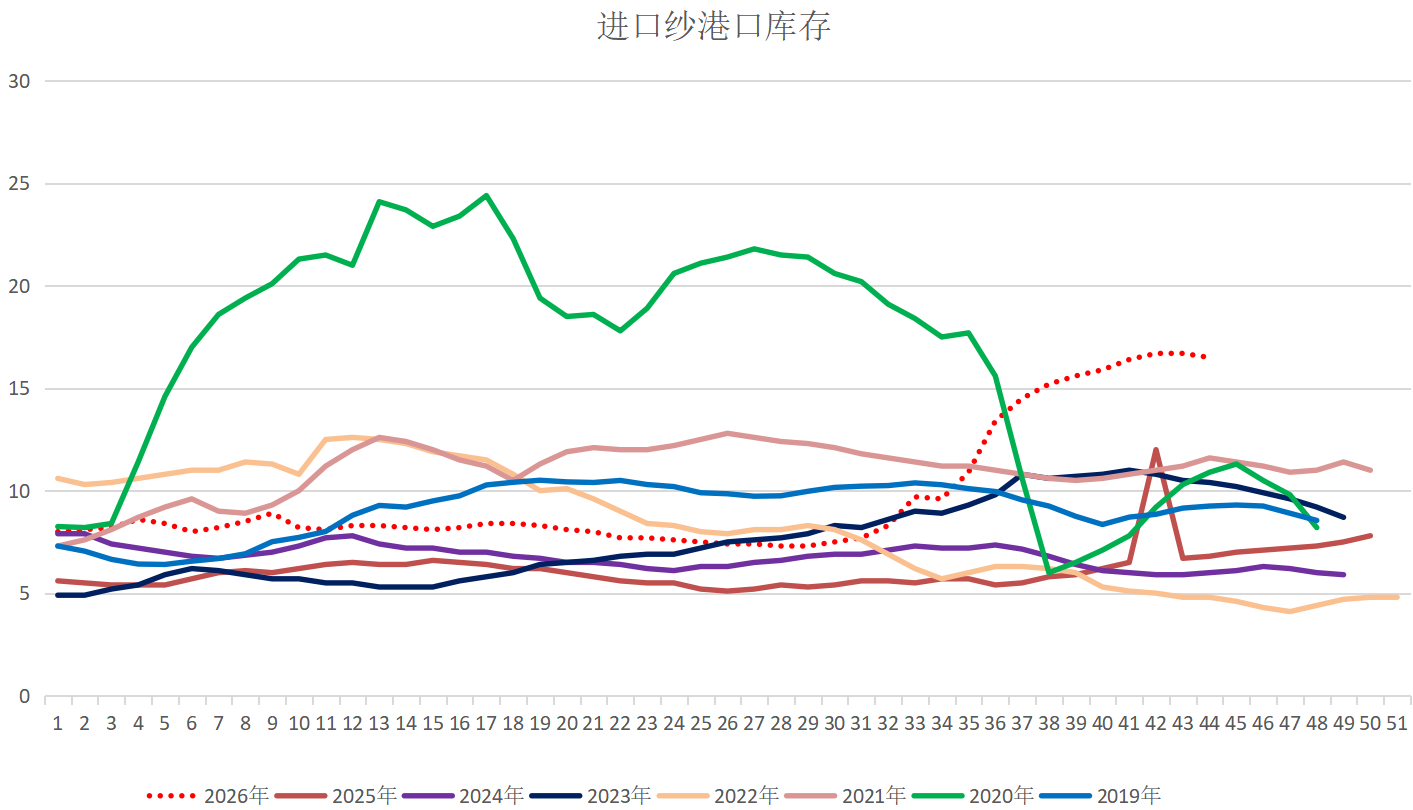
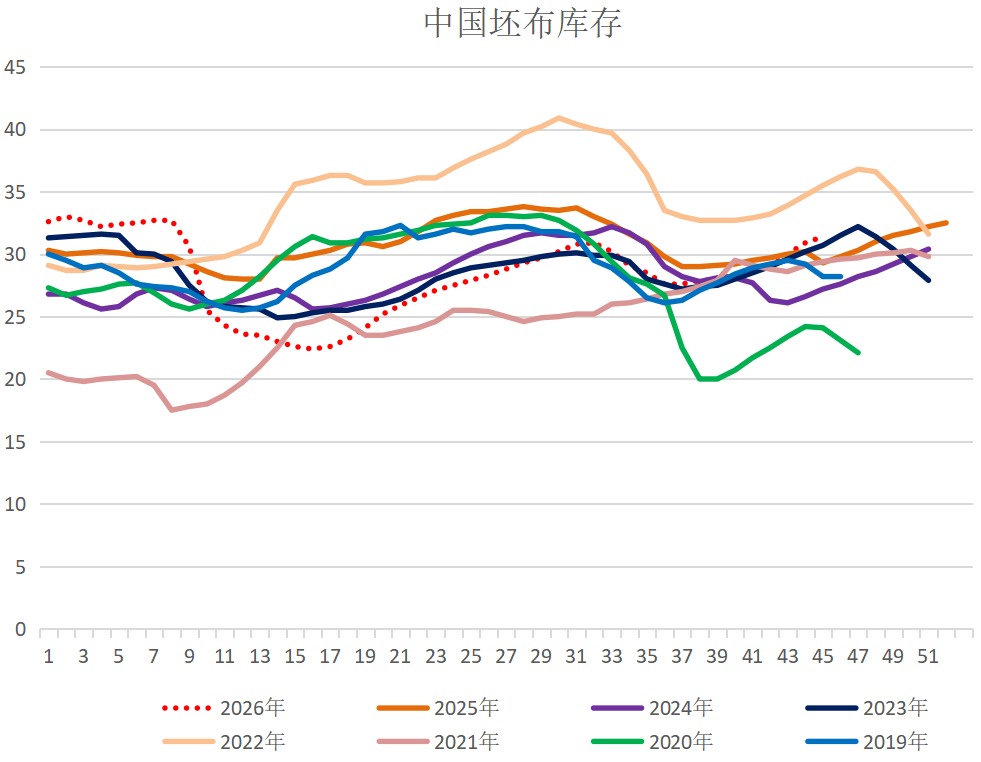
Overall, in the short term, high costs and low warehouse receipts support the oversold rebound of the market, but weak downstream demand restricts the upward space. Once the market approaches the cost range, cotton mills' hedging will re-enter, and warehouse receipts may rapidly increase. Cotton prices are currently not driven by a unilateral trend, maintaining a range oscillation pattern, with support at 15250 below and pressure at 15600-15850 above. Focus on tracking the registration pace of new cotton warehouse receipts and the progress of downstream cotton yarn inventory.
-
【Wdoodoo Weekly Paper Industry Report】Supply disturbances are frequent, and pulp is experiencing a pullback and low absorption8762
-
【Wdoodoo Weekly Cotton Report】High base spread and low warehouse receipts support rebound, but weak demand limits Zhengzhou cotton space5899
-
【Wdoodoo Weekly Paper Industry Report】Supply side disturbance supports pulp prices, and there is downward pressure space for finished paper8383
-
【Wdoodoo Weekly Cotton Report】India's production cut is beneficial for the market, while hedging sell-offs still await digestion8368
-
【Wdoodoo Weekly Paper Industry Report】Spot basis strengthens, pulp oversold rebounds5393