
【Wdoodoo Weekly Pulp Report】Macro Headwinds & Lower Overseas Offers Drive Pulp to Accelerate Bottom Hunting
Pulp futures extended their downtrend this week and hit a nearly five-year low, with prices across the entire industrial chain remaining soft. The average softwood pulp price stood at around RMB 4,724 per ton, down RMB 168 week-on-week; the average hardwood pulp price was RMB 4,422 per ton, down RMB 44 week-on-week. Dual pressure from hawkish rate hike expectations and loose supply-demand fundamentals has pushed pulp into accelerated bottom probing.

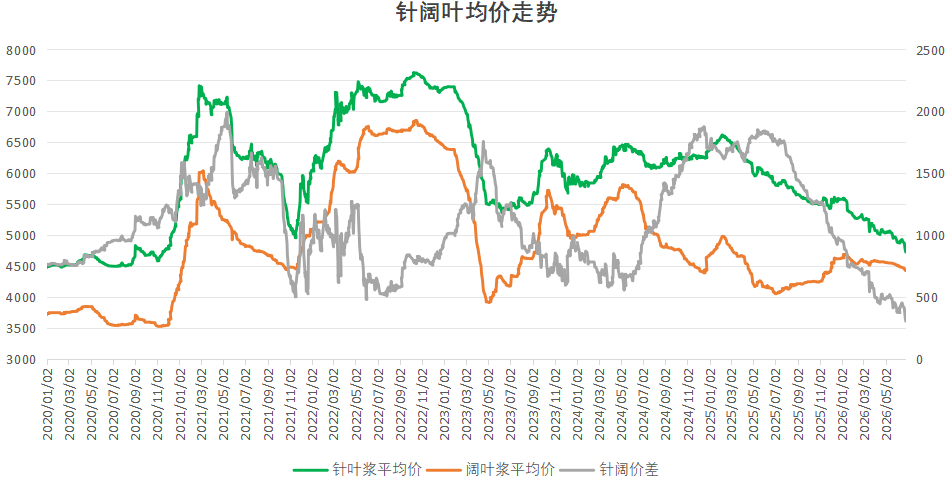
1,Macroeconomic Outlook: Dual Liquidity & Geopolitical Headwinds Keep Near-Term Sentiment Bearish
The global monetary tightening cycle has dampened risk appetite for commodities, and a stronger US dollar weighs on commodity prices. Fading geopolitical risk premiums in crude oil triggered a sharp slump in energy and chemical products, dragging down commodity indices. On the flip side, falling commodity prices help ease inflation, which will curb aggressive rate hike bets.
The Lujiazui Forum hinted at multiple growth-stabilizing policies. Intensive field inspections by central authorities recently signal forthcoming incremental stimulus measures; market participants will closely track the policy tone to be set at the late-July Politburo meeting.

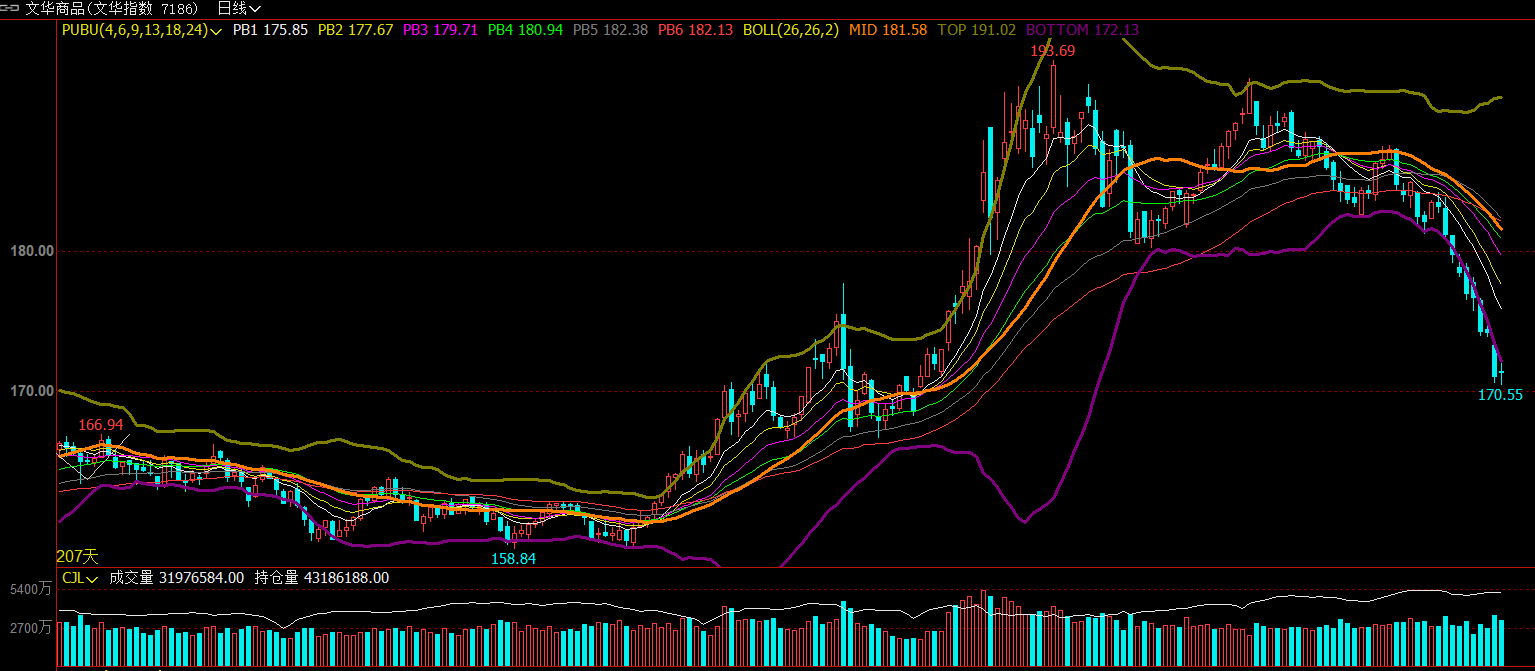
2、Supply Side: Weak Overseas Offers & Elevated Port Inventories Exert Downward Pressure
Pulp mills face heavy destocking pressure. Overseas USD quotations for both softwood and hardwood pulp edged down by USD 10–20 per ton across June. Early this week, Arauco cut its mid-month hardwood pulp offer by USD 20 per ton, dealing a severe blow to market sentiment. Coupled with expectations of new pulp mill capacity coming online in the long run, hardwood pulp prices slumped faster, and price support from low-cost softwood pulp fully collapsed.

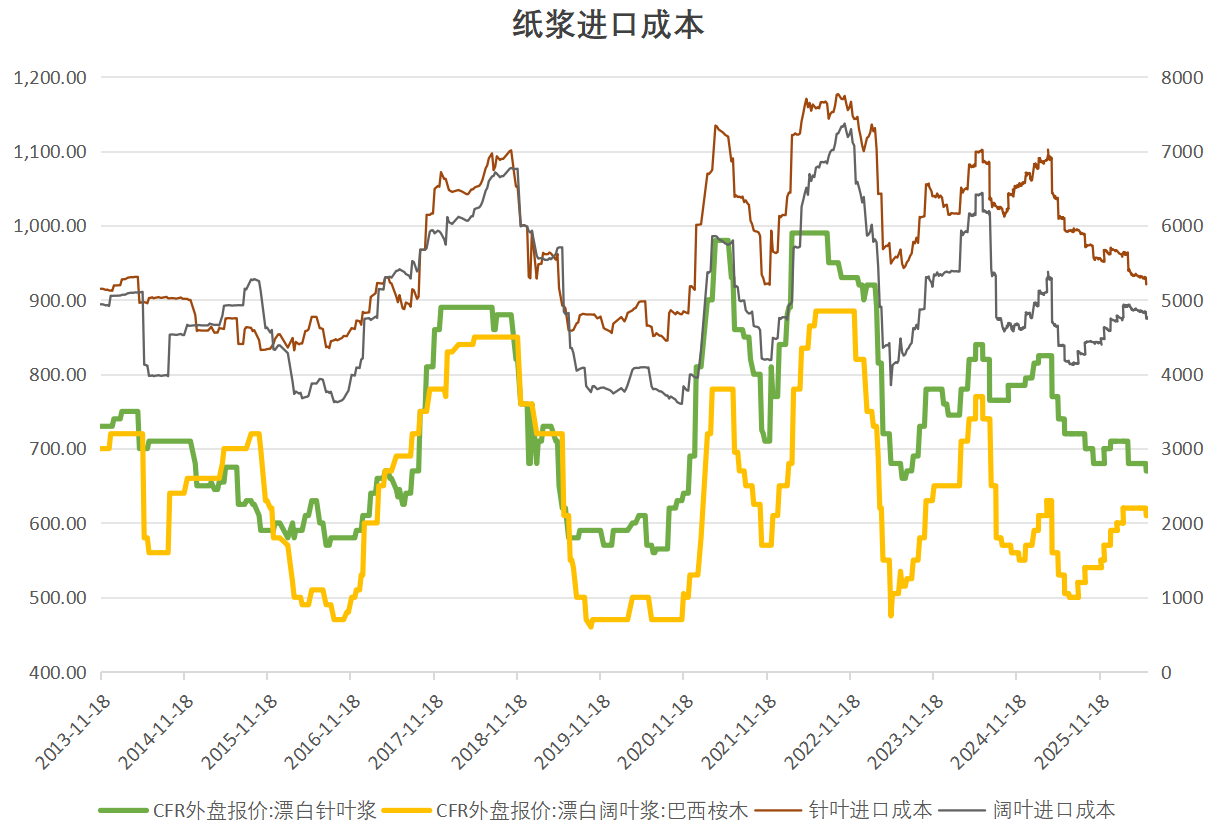
China’s pulp imports reached 2.99 million tons in May, falling 7% month-on-month, yet near-term supply pressure has not eased. Ample pulp stocks remain at ports, with total inventories at major ports hitting 2.33 million tons, still sitting at multi-year seasonal highs. Warehouse receipts keep rising. Under a futures premium structure, circulation of low-priced deliverable goods is restricted, continuously weighing on futures market prices.
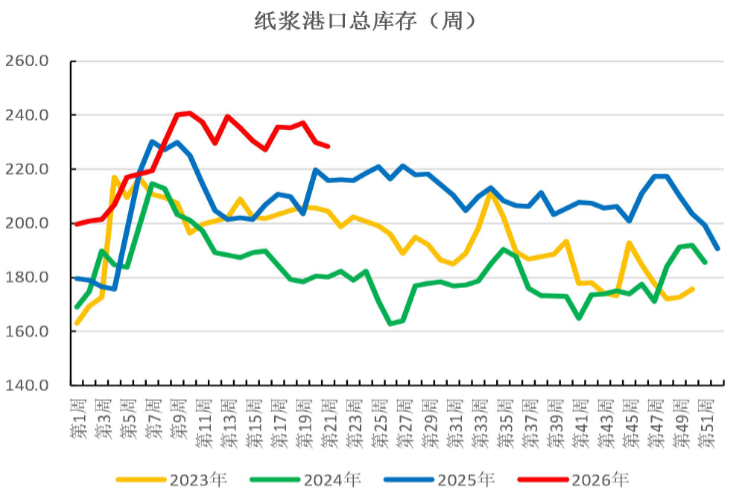


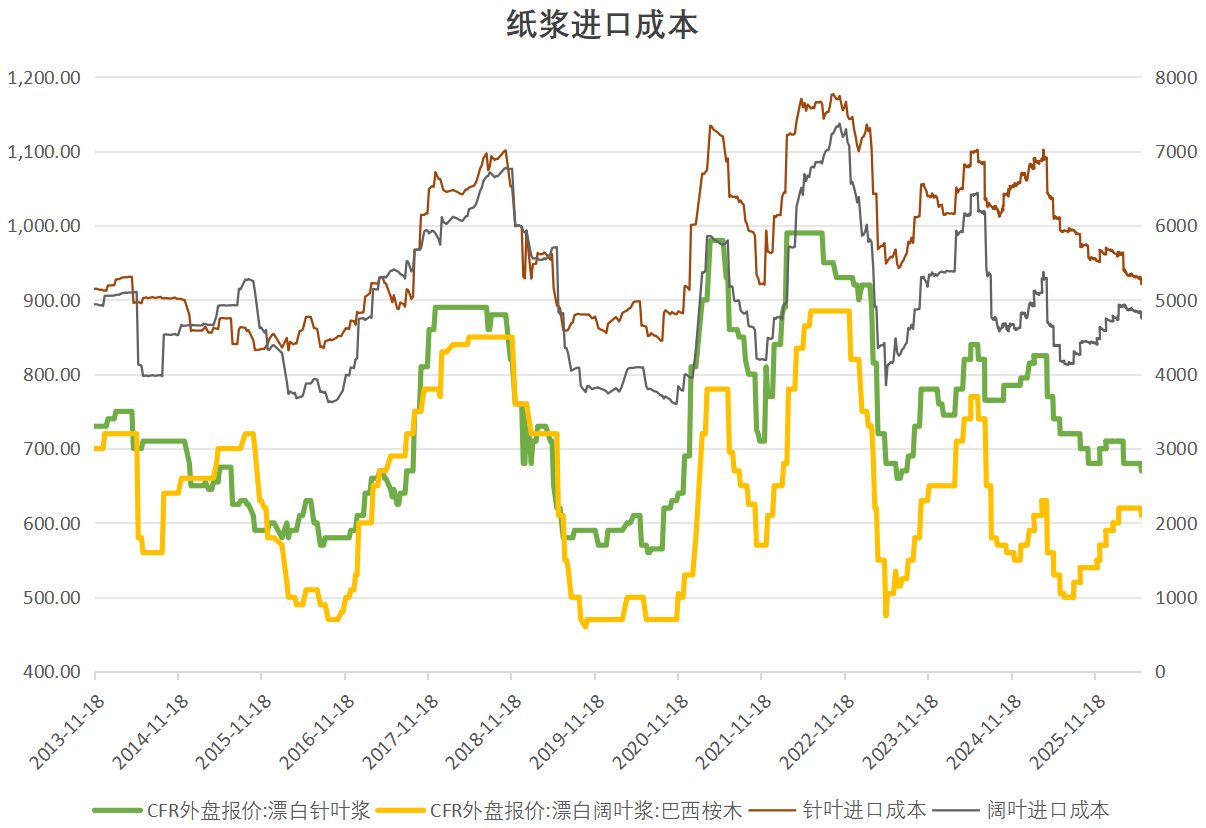
3. Downstream Paper Mills Prioritize Price Cuts & Destocking; Raw Material Restocking Momentum Remains Weak
The downstream papermaking sector has entered its traditional off-season. Domestic paper output posted a seasonal decline with widening losses. Paper mills adopt a cautious stance on raw material purchases, only buying to meet rigid demand with little willingness to build up inventories voluntarily.
By paper grade: Orders for printing & writing paper and tissue paper kept shrinking, leaving mills facing sluggish product shipments. Multiple white cardboard producers released price hike notices, yet insufficient follow-up demand limited actual price gains. Packaging paper is the sole resilient segment, lifting spot quotations for unbleached pulp in some regions.
Sustained pulp price declines have reduced raw material costs for paper manufacturers and enabled a recovery in processing margins. Profit divergence emerged across the industrial chain: upstream pulp producers suffered losses while downstream paper makers saw improved profitability.


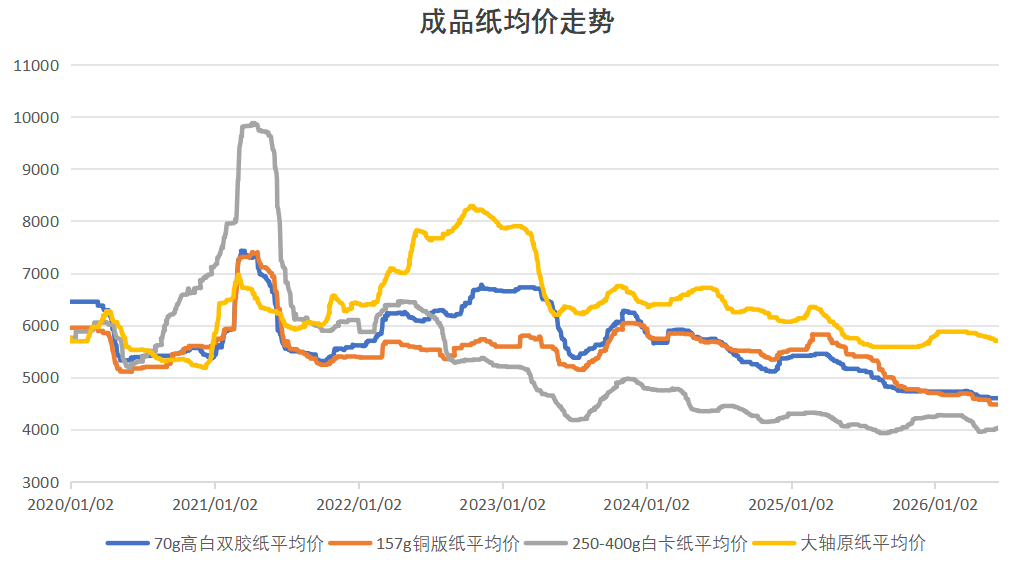
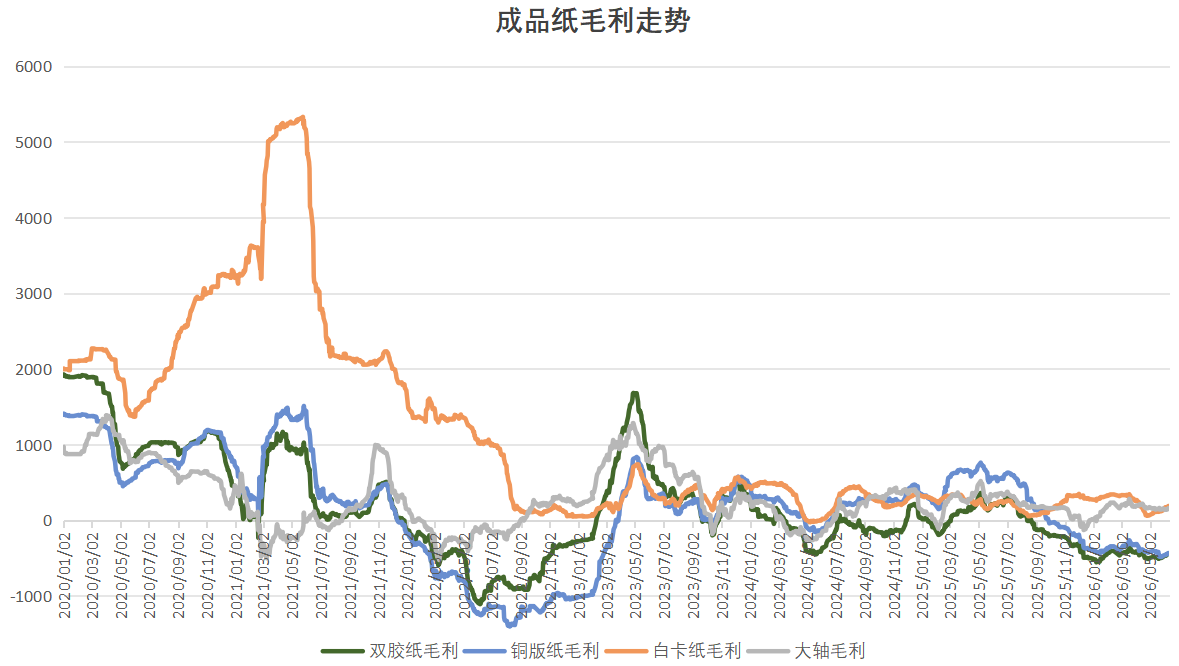
Overall, bearish drivers including high port inventories, falling overseas pulp offers and downstream off-season demand dominated market moves, pushing futures prices to a five-year trough. Nevertheless, marginal positive signals have gradually emerged: improved trading volume for low-cost softwood pulp, confirmed production cuts at overseas softwood pulp mills, and cooling hawkish Federal Reserve rate hike expectations.
That said, the fundamental supply-demand imbalance has not been fundamentally resolved, and the market has not yet reached a trend reversal inflection point.
From a technical perspective, the market remains bearish below RMB 4,800; a wait-and-see stance is recommended in the short term. Key monitoring indicators include the progress of maintenance shutdowns at overseas pulp mills, recovery of operating rates at downstream paper mills, and shifts in Federal Reserve monetary policy.
-
【Wdoodoo Weekly Cotton Report】Drought in U.S. cotton continues to intensify, with domestic demand closely monitored7844
-
【Wdoodoo Weekly Paper Industry Report】Pulp mills cut production to support pulp prices, while weak paper prices limit the upside5406
-
【Wdoodoo Weekly Cotton Report】Cotton: Drought fermentation in main production areas drives up cotton prices, while weak demand restricts space above7413
-
【Wdoodoo Weekly Paper Industry Report】Frequent shutdowns and production cuts in pulp mills, leading to a new high of rebound in pulp production6350
-
【Wdoodoo Weekly Cotton Report】There is a risk of a downturn in recent months, and attention should be paid to whether the demand side is taking over6948