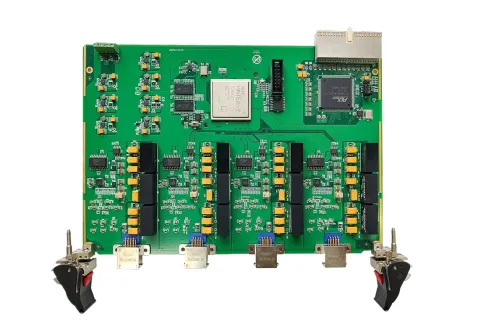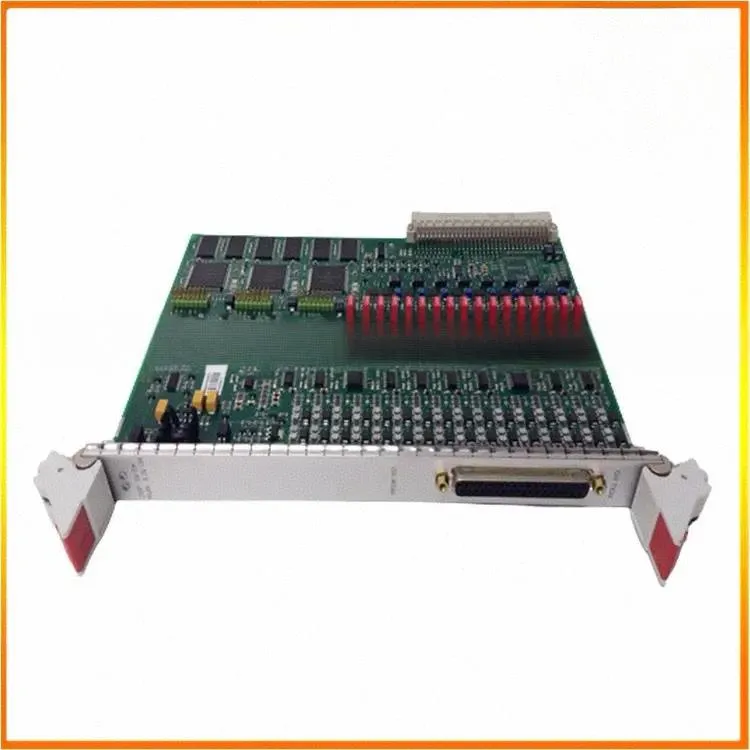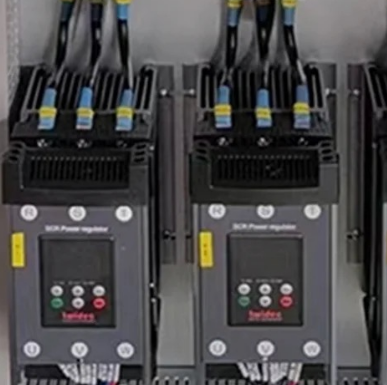
Signal Conversion Control Board

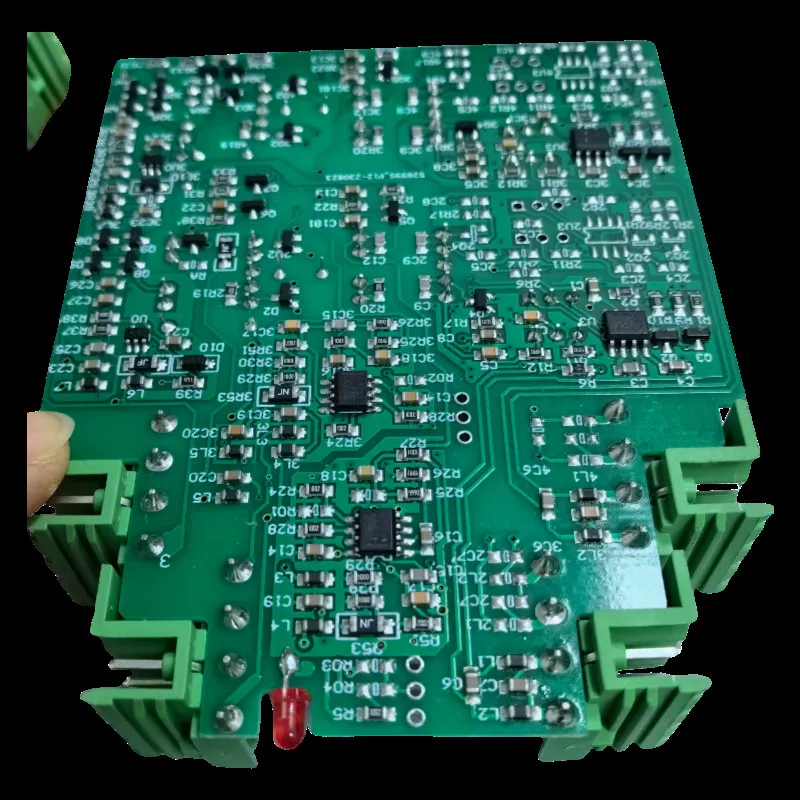
The working principle of the signal conversion control board mainly involves signal collection, processing and output control. The specific principles are as follows:
1. Signal collection and processing:
Raw signals, such as physical quantities such as temperature and pressure, are collected through sensors or input modules (such as digital quantity I/O modules). These modules convert non-standard signals (such as resistors, capacitors, voltages, currents) into standard signals (such as 4-20mA, 0-10V).
2. Signal conversion:
Analog or digital circuits are used to convert non-electrical signals (such as pressure, temperature) into electrical signals. For example, a piezoelectric sensor converts pressure changes into a current or voltage signal, which is then converted into a digital signal through an analog-to-digital converter (ADC) for computer processing.
3. Control logic:
Signal processing and control logic are implemented through a microprocessor or PLC (such as the S7-1200 series). For example, the traffic signal controller generates a timing plan through a microprocessor and controls the light phase output unit to switch traffic light colors.
4. Modular design:
Most control boards adopt a modular structure. For example, the S7-1200 series supports digital/analog input/output modules, allowing flexible expansion of functions. Modules communicate through standard interfaces (such as RS485) for easy maintenance and upgrades.
| Company Name | Beijing Weiduoduo E-Commerce Co., Ltd. | Country/Region | China |
| Business Type | Retailer | Company Size | 100 |
| Established | October 1, 2025 | ||
| Address | beijing fengtai | ||
| Main Products | Paper Manufacturing, Textiles, and Paper Packaging | ||
Beijing Wdoodoo E-Commerce Co., Ltd. (hereinafter referred to as “Wdoodoo”) is a core subsidiary of Guolian Co., Ltd. Established in August 2016, the company is positioned as an “Internet+” upgrade platform across the entire industrial chain, covering industries such as papermaking and packaging, smart textiles, industrial starch, recycling and environmental protection, rubber, and robotics. Its business scope includes wood chips, bamboo chips, pulp, base paper, paper rolls, industrial starch, cotton, fibers, plastic bottle flakes, yarns, grey fabrics, rubber, and robots.
The company primarily engages in B2B transactions of raw materials and finished products, supported by cloud ERP and cloud logistics systems. Driven by “aggregated procurement” and “supply chain upgrading services,” Wdoodoo actively promotes the development of an industrial Internet e-commerce ecosystem.
Send Inquiry